ST THOMAS
CE PRIMARY SCHOOL
.png)
YEAr 1
🌟 Welcome to Year 1 🌟
✨ Where curiosity grows, imaginations thrive, and every child is valued. ✨
👋 Meet the Year 1 Team 👋
We have 2 classes, which are called 1SW and 1P.
👩🏫 Class Teachers: 1SW - Mrs Washington and Mrs Sloan 1P- Miss Pickard
🧑🤝🧑 Supported by our ETA- Mrs Fox and Mrs Imran
We also work closely with our SEND and pastoral teams to make sure all children feel safe, supported and celebrated every day.
👋 Welcome to Year 1 at St Thomas Primary School!
We would like to give a warm welcome to all of our families, new and returning. We are so excited to share this special part of your child’s journey with you. In Year one, children begin a more formal approach to their learning. Our class teachers have knowledge of what the children have learnt in Reception and we work hard to support transition into Year one. We create a happy, calm and inspiring space where children are encouraged to develop independence and resilience. They continue to explore, ask questions and grow in confidence. We will share with you what your child will be learning in Year One on this page. We ensure all children feel valued, safe and successful as they begin their journey in Key Stage One.
We look forward to working closely with you this year.
Mrs Washington, Mrs Sloan, Miss Pickard and the year 1 team.
🕰️ Our Daily Routine
Here’s what a typical day looks like in Year 1:
-
8:40 Welcome and morning jobs
-
8:50 Register
-
9:00 Assembly (Mon/Weds/Fri) / in class assembly (Tues/Thurs)
-
9:25 Phonics
-
10:00 English 1SW and Foundation subject 1P
-
10:45 Break, snack and story time
-
11:15 Foundation subject 1SW and English 1P
-
12:00 Lunch
-
12:45 Reading
-
1:15 Maths
-
2:00 Foundation subjects (PE, ICT & more!)
🧠 Our Curriculum: Learning Through Wonder
The St Thomas curriculum is packed with hands-on and exciting half termly topics.
We will be continuing drawing club for this first term in year 1 to help the transition from reception. Our focus will be letter formation and simple sentences to support the children using capital letters, finger spaces, full stops and writing their letters on the line.
Reading is a new lesson this year for Year 1. We will be reading different books linked to our English books. This allows the children to immerse themselves in the book and have a really good understanding of new and unfamiliar vocabulary from the books.
In Maths, we will be learning about place value within 10 and will last for 5 weeks. The children will learn to sort objects, count forwards and backwards to 10, recognise numbers as words and more! This topic is very practical and uses concrete resources such as counters and cubes to support children’s learning.
Home learning videos will be assigned on Seesaw to support areas of learning that need a bit more practice. At home workbooks will also be assigned on Seesaw at the end of each topic. Please log in regularly to check for all the activities that we will assign regularly.
Our first Art topic will be completed in the first week of Year 1 and will focus on colour mixing. The children will learn the primary colours and the secondary colours. We will look at different types of colour mixing and ways to represent the primary and secondary colours.
After the first week of colouring mixing, we will move on to a project called Funny Faces. This uses different artists to create portraits of different people.
Our History project is all about Childhood. We will look at how things change overtime, family trees and different life stages. This topic is always a lovely start to the year being able to look at all the children’s family trees.
Our Geography topic is Our Wonderful World. Children will learn about the different continents, maps, location and more. This topic is always a lovely start to the Geography Year 1 Curriculum as we sing songs to learn the different continents, oceans and more!
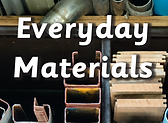
In Science, we will be looking at the different properties for different everyday materials such as waterproof, transparent and durable. This topic will allow the children to plan, investigate and evaluate different materials.
Our first Computing topic will all be about different technology, technology in our classroom, developing mouse and keyboard skills. This gives children a fun and practical way to learn about technology.
At the beginning of every term, we will do a online safety lesson. This will help children understand the positives and negatives of the internet and what it is.
This topic will focus on celebrating the children, their families and the people around us. The children will learn about others have different interests, families and more!
PE for 1SW is on Wednesday and Friday. Therefore, please can 1SW come in PE kits on WEDNESDAY and FRIDAY. PE for 1P is on Monday and Tuesday. Therefore, please can 1P come in PE kit on MONDAY and TUESDAY.
Library for 1SW is on Thursday afternoon and 1P is on Wednesday afternoon. Please remember to bring your book bag every day and check that they have their reading book and record.yday.
🏡 Home Activities to Support Our Learning
We upload activities onto Seesaw on a regular basis, which is our online learning platform. Please log in regularly to check for activities that support your child’s learning at home.
Reading at home
Children in Year One have a phonics screening check in the summer term. This is a mandatory, short assessment to see if they can decode words using their phonics knowledge. This test checks their ability to read real and alien words (nonsense) to assess their ability to blend sounds together in words. Please find further information below;
https://www.gov.uk/government/publications/phonics-screening-check-information-for-parents
Therefore, we cannot stress enough the importance of reading at home with your child. We actively encourage children to read, read and read again to support their fluency and confidence. We want children to be able to read their book fluently; this means without stopping, hesitation or relying on sounding out. The only way children can improve is by regular practise. We really need your support at home to encourage your child to read their book at least four times a week. Please consider reading in short bursts, little and often if your child finds it overwhelming to read in one sitting. Also consider reading at different times of the day e.g., whilst eating breakfast, sat in the car on the way to school, at bedtime and on a weekend. Create a positive approach to reading by praising their effort and helping them to sound words out and recognise the harder to read and spell words.
Maths at home
We also upload the white rose maths videos that demonstrate what and how your child is learning at school. There are follow up tasks for your child to complete at home. These are really useful for you to know and understand how your child is being taught at school.
Children in year one need to be able to count aloud in ones to 100; count aloud in 2s, 5s and 10s. They need to recognise odd and even numbers up to 20; They also need to be able to recall number bonds to 20. Again, regular practice at home will really support their progress.
Home activities to support our learning
English- Poetry and narratives
-
Practice forming letters correctly.
-
Talk about what happens in the story and encourage use time connectives such as first, next, then, after, finally.
-
Write a set of simple sentences using a capital letter, finger spaces and a full stop.
Maths-
-
Practice counting aloud in 2s, 5s and 10s.
-
Count aloud to 100.
-
Find one more and one less than numbers up to 100.
-
Understand what each digit in a two-digit number represents e.g., 52 is 5 tons and 2 ones.
History- Childhood
-
Asking about their favourite toy.
-
Photos of them as babies, todlers and children.
-
Ask their Mummy, Daddy and their grown up what their favourite toy is
🧰 Extra Support & SEND
We are proud to be an inclusive and nurturing school. In Year 1, we:
-
Use visuals, sensory breaks, and personalised timetables
-
Follow targets and the Kirklees Graduated Approach
-
Run interventions like Lego Therapy, Extra reading and Phonics.
-
Have close links with external agencies.
If your child needs extra support, we’ll work with you every step of the way.
🎒 What to Bring Each Day
✅ Bookbag- Please remember to bring your book bag every day and check that they have their reading book and record. Please do not put your child’s water bottle into their book bag to avoid leakages damaging reading books.
1P visit the school library on a Wednesday afternoon and 1SW on a Thursday afternoon. Please ensure your child returns their book weekly
✅ Water bottle
✅ Coat (we go outside rain or shine!)
✅ Reading book & record
💬 Communication
We use Seesaw and Class dojo to share updates and photos. You can also reach us via the school office or email. We’re always happy to help!
❤️ A Place to Belong
In Year 1, we believe in:
✅ Being Ready, Respectful and Safe
✅ Celebrating our differences
✅ Helping children find their voice
✅ Growing confidence through creativity and kindness